The Ultimate Playbook: Mastering Serviced Accommodation in 2025 and Navigating the New UK Rules for Maximum Property Cashflow

Why 2025 is the Year for SA Strategy
The market for Serviced Accommodation (SA), also known as short-term rentals, has fundamentally matured. Gone are the days of simply listing a spare room on Airbnb and watching the profits roll in.
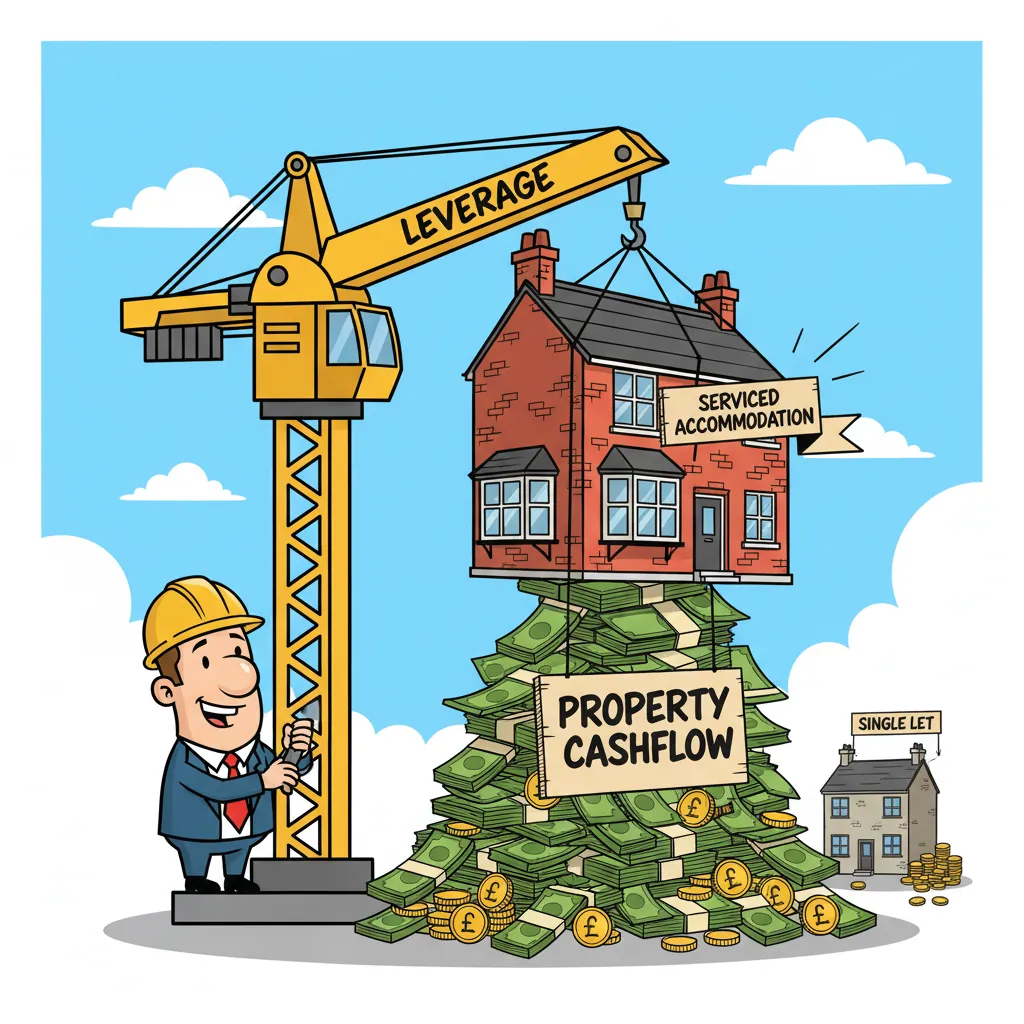
In 2025, SA is less of a hobby and more of a complex, high-yield business. The rewards remain significant—SA can often generate 2x to 3x the net income of a traditional single-let property—but the compliance and operational demands are higher than ever.
For the modern UK investor, success in Serviced Accommodation in 2025 depends on a business-first mindset, rigorous systemisation, and a clear understanding of the evolving legal landscape. This complete guide breaks down the three critical phases you must master to achieve predictable, maximum Property Cashflow from your SA units.
Phase 1: The Profit Foundation (Tax and Yield)
The appeal of SA is driven by two factors that beat almost any Buy-to-Let (BTL) model: superior tax efficiency and exponentially higher yields.
The Power of Furnished Holiday Lettings (FHL) Status
If your SA unit meets specific criteria, it qualifies as a Furnished Holiday Letting (FHL). This is the key to unlocking significant tax benefits that are unavailable to standard BTL investors.
FHL status provides incredible financial leverage:
● Full Interest Deduction: Unlike standard BTL, where mortgage interest is treated as a tax credit (Section 24), FHL allows 100% of your mortgage interest to be claimed as a deductible expense against rental income, significantly cutting your tax bill.
● Capital Allowances: You can claim capital allowances on the cost of wear and tear of items necessary for the letting business, such as beds, sofas, and equipment. This relief is not available to standard BTL investors on furnishings.
● Capital Gains Tax Relief: FHL may qualify for business-focused tax reliefs on disposal, such as Business Asset Rollover Relief or Gift Hold-Over Relief, offering a powerful exit strategy.
● Pension Contributions: The income derived from FHL is treated as ‘relevant earnings’ for pension contribution purposes, which can be an excellent way to grow your retirement savings.
Action Item: The property must be available to let for 210 days and actually let for 105 days of the tax year to qualify for FHL status. Track these metrics meticulously.
Superior Net Yield (The Daily Pricing Advantage)
SA gives you daily pricing power, allowing you to charge premiums during peak seasons (holidays, concerts, business events) that a long-term contract prevents.
A BTL property offers a fixed, static monthly rent. SA, conversely, generates dynamic daily revenue, targeting an average occupancy rate of 70-80% at a rate that is 2-4x the long-term equivalent.
When calculating your yield, always factor in the higher operational costs of SA: utility bills (often included), cleaning, consumables, and platform fees (Airbnb/Booking.com take 3-15%). Even with these factored in, a well-run SA unit should aim for a minimum 12-15% Net Yield.
Phase 2: Navigating the 2025 Regulatory Maze
The UK government is tightening the reins on short-term letting to address housing supply and local disruption. Success in Serviced Accommodation in 2025 requires proactive compliance.
The Registration Scheme and Potential Licensing
The UK government is currently developing a national registration scheme for short-term lets.
● Action: Expect mandatory registration with local authorities, similar to the HMO license register. Factor in a registration fee and the need for stricter fire, gas, and electrical safety standards than BTL.
● Risk Mitigation: Some councils are also introducing “Tourist Taxes” or higher council tax rates for short-term rental businesses. Budget for these potential costs now to protect your Property Cashflow.
Planning and Article 4 Direction
This is the biggest headache. Councils are increasingly using Article 4 Directions to require full planning permission for changing a property’s use from a standard residential home (C3) to a short-term let/HMO (sometimes C4, or sui generis).
● Sourcing Focus: Always check if the area you are sourcing in (e.g., city centre postcodes) has an active Article 4 Direction targeting short-term lets.
● If not, act now. If an area is highly profitable but not yet regulated, securing your property’s use before regulation comes into effect is the ultimate advantage.
Finance and Insurance
Standard BTL mortgages and insurance policies are void if used for Serviced Accommodation.
● Mortgage: You require a specialist FHL mortgage. These are readily available but require a higher deposit (often 25-30%) and are assessed based on the property’s achievable nightly rate, not standard rental income.
● Insurance: You must have a commercial Serviced Accommodation insurance policy that covers guests, public liability, and malicious damage.
Phase 3: The Operational Blueprint (Systemisation for Scale)
A single SA unit is a job; a portfolio of SA units is a business. The only way to achieve scale and true passive Property Cashflow is through systemisation.
The Essential Tech Stack
You cannot manage daily operations manually. Your business needs three integrated software components:
1. Property Management System (PMS): This is the central hub for all bookings, guest data, and communication (e.g., Smoobu, Guesty).
2. Channel Manager: This software synchronizes prices, availability, and bookings across all platforms (Airbnb, Booking.com, VRBO) to prevent the costly error of double-bookings.
3. Dynamic Pricing Tool: This automatically adjusts your nightly rates based on competitor pricing, local events, and time-to-booking to maximise revenue (e.g., PriceLabs, BeyondPricing).
Outsourcing and Automation
Your time should be spent sourcing and structuring deals, not washing towels. To eliminate yourself from daily tasks, focus on these systemisation goals:
● Cleaning and Maintenance: The goal is complete turnaround within three hours of checkout. You need a reliable, specialist SA cleaning company paid per clean, managed via a scheduling software.
● Check-in and Check-out: Aim for zero involvement from the investor. Implement key safes or smart locks with unique codes for each guest.
● Guest Communication: Use your PMS to deploy automated pre-arrival, check-in instructions, and review requests.
● Consumables: Automate restocking based on occupancy through remote stock monitoring and automated purchasing from suppliers.
Serviced Accommodation in 2025 is not passive; it is systemised. The shift from being a hands-on landlord to a strategic business owner is the only way to reap the huge rewards this sector offers.
Embrace the compliance, invest in the right systems, and structure your business for FHL benefits. Do this, and you will secure a far greater, more flexible stream of Property Cashflow than any traditional rental model can provide.
Ready to stop treating your SA unit like a rental and start running it like a high-yield hospitality business?
The team at Property Cashflow provides expert guidance on SA setup, FHL compliance, and operational systemisation. We ensure your SA business is structured for maximum tax efficiency and minimal effort.
We specialize in high-cashflow investments in the Liverpool and Wirral areas, understanding the specific tourist demand, licensing requirements, and investment hotspots needed for successful SA launch and scale.
Don’t just invest in SA; build an SA business.
Contact us today to discuss setting up your high-yield Serviced Accommodation portfolio: Email: info@propertycashflow.co.uk

Find out what type of investor you are. Take the free investor test to see your real risk profile, then grab the free book with the 12 most powerful ways of making money in UK property.